Gutter Installation Green Bay
Gutter installation is the start of a dry basement, clean siding, and a roof edge that sheds water the way it should. We install seamless, sectional, half-round, and copper gutters across Green Bay and Brown County — measured on site, formed for your roofline, and finished with downspouts that carry water clear of your foundation. Get a free inspection and an upfront quote today.
What is gutter installation?
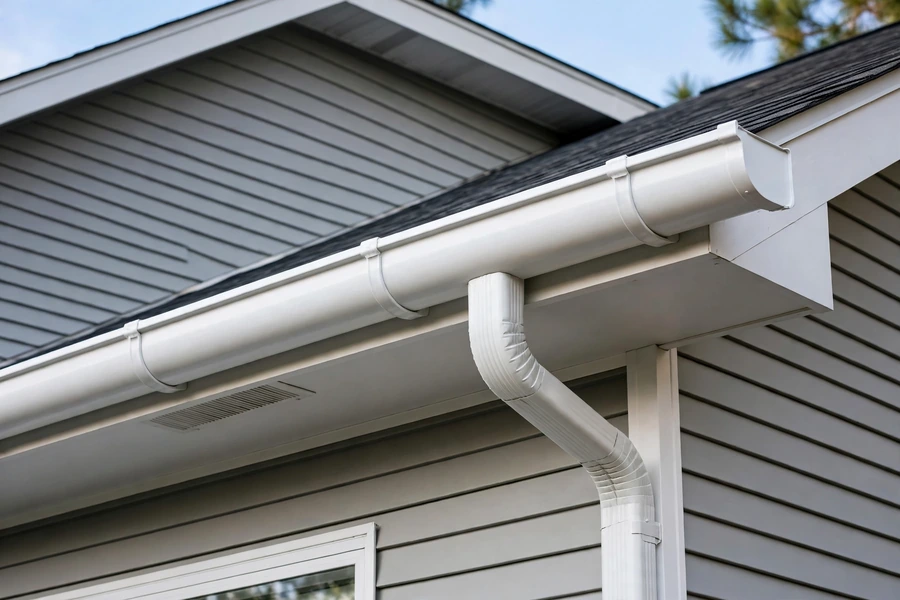
A new gutter is hung along the roof edge to catch rain and melting snow and carry it through downspouts away from the house. On most Green Bay homes that means one continuous seamless aluminum run per roof edge, pitched slightly toward the downspouts, with elbows at the bottom that throw water clear of the foundation.
Gutter Installation Services in Green Bay
- Seamless aluminum gutter installation — formed on site to the exact length of your roofline.
- Sectional gutter installation — for garages, sheds and budget jobs.
- Half-round gutter installation — for older and historic Green Bay homes.
- Copper gutter installation — premium metal, premium lifespan.
- Downspout installation and extensions — sized and aimed to protect the foundation.
- Gutter guard installation — ask about adding guards with your new gutters.
- Fascia inspection and repair — we check the boards your gutters hang from.
- Full replacement — tear-off of the old system and clean install of the new.
When Does a Gutter Need to Be Installed?
- Gutters are rusted through or split at the seams.
- Sections sag or pull away from the fascia.
- Water pours over the front edge in normal rain.
- The basement gets wet every time it storms.
- You are replacing the roof — new shingles deserve new gutters.
- The old system is undersized for the roof it drains.
Why Do Gutters Need to Be Installed?
- To move roof water away from the foundation and basement.
- To stop siding rot, fascia decay and landscape washout.
- To prevent ice dams from backing water under the shingles.
- To protect driveways and walkways from constant drip erosion.
- To keep the roof edge and soffit dry for decades.
What Gutter Is Good to Be Installed?
For most Green Bay homes, seamless aluminum is the right call. It is light, it does not rust, it handles freeze–thaw, and because it is formed in one piece there are no joints along the run to open up and leak.
- Choose seamless aluminum for the best mix of price, lifespan and looks.
- Choose sectional aluminum for outbuildings or tight budgets.
- Choose half-round for historic homes where the profile matters.
- Choose copper when you want the longest-lasting gutter made.
- Size up to 6-inch K-style for steep roofs or heavy tree cover.
Types of Gutters We Install
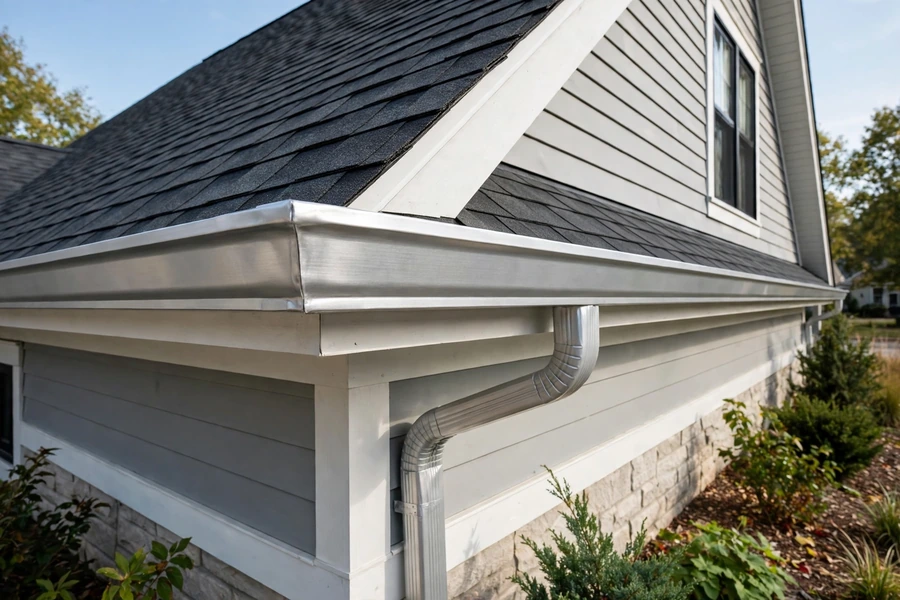
Seamless Aluminum — The most common choice in Green Bay. Formed on site in one continuous piece, so there are no joints along the run to leak.
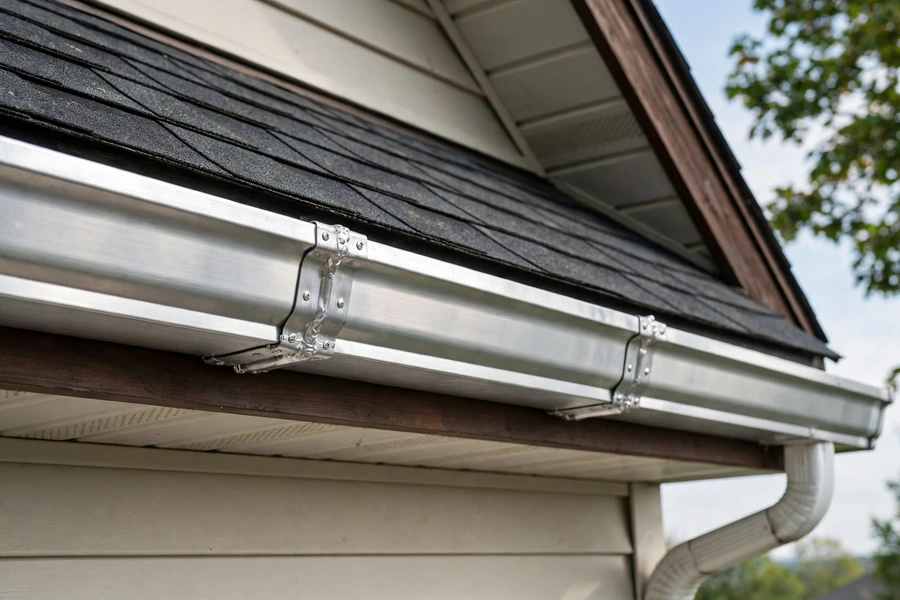
Sectional Aluminum — Pre-cut lengths joined every few feet. A budget-friendly option for sheds, garages and rentals.
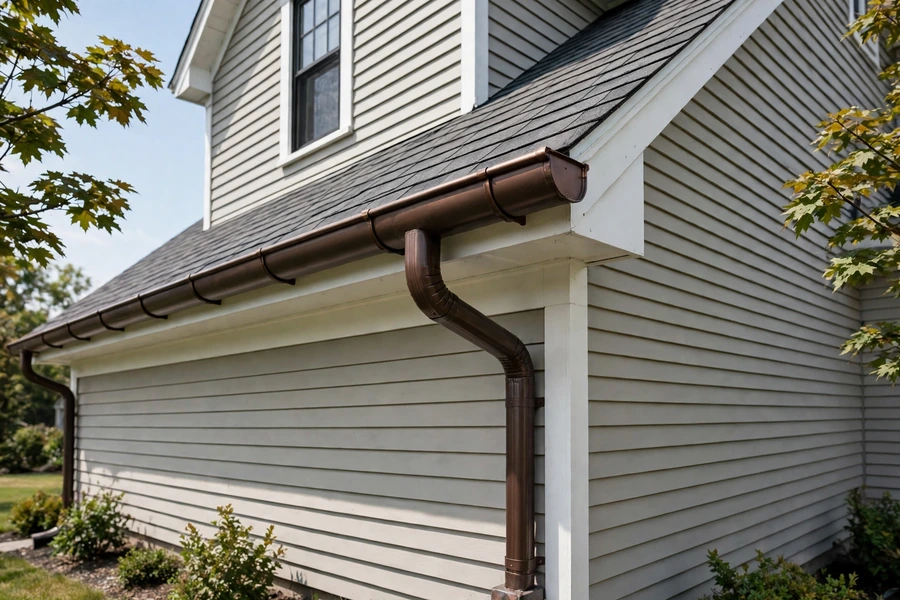
Half-Round — A rounded, classic profile that suits older and historic homes. Handles moderate rain well and looks the part.
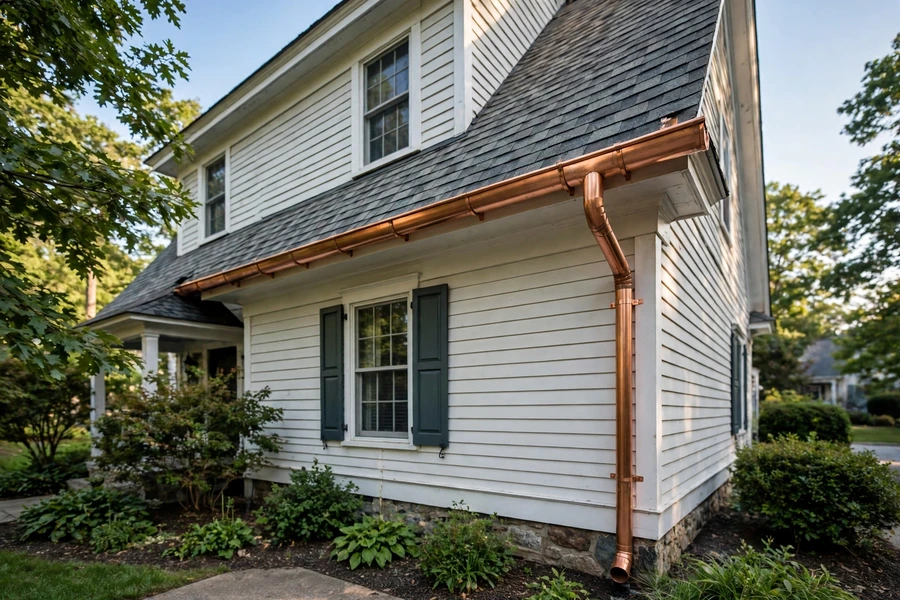
Copper — The premium metal. Develops a natural patina, resists corrosion, and outlasts every other gutter material.
Material Needed to Make Gutter
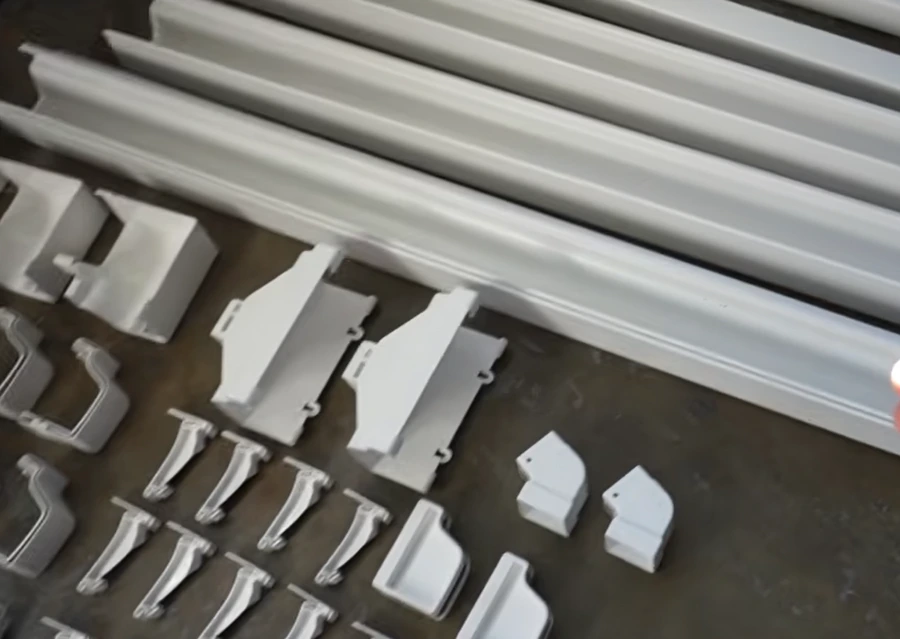
Every install starts with the right parts on the truck. We bring:
- Gutter coil or sections — aluminum, steel or copper, in your color.
- End caps — left and right, sealed watertight.
- Hidden hangers — brackets every 24 inches into solid fascia.
- Downspouts, elbows and straps — to get water away from the house.
- Sealant and screws — flexible sealant plus rust-proof fasteners.
Tools Used in Gutter Installation
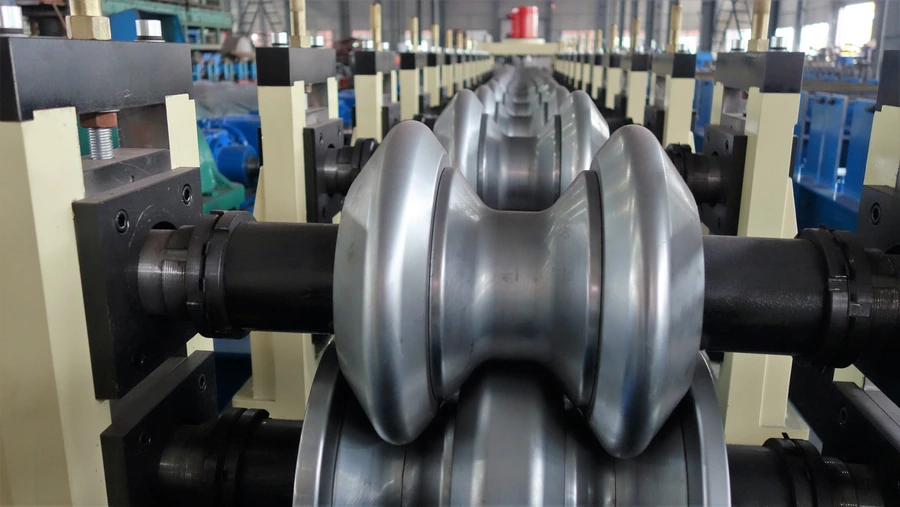
1. Roll-forming machine
The roll-forming machine is the heart of a seamless install. It takes a coil of flat aluminum and extrudes it into a finished K-style profile, cut to the exact length of your roofline — no factory seams, no weak joints.
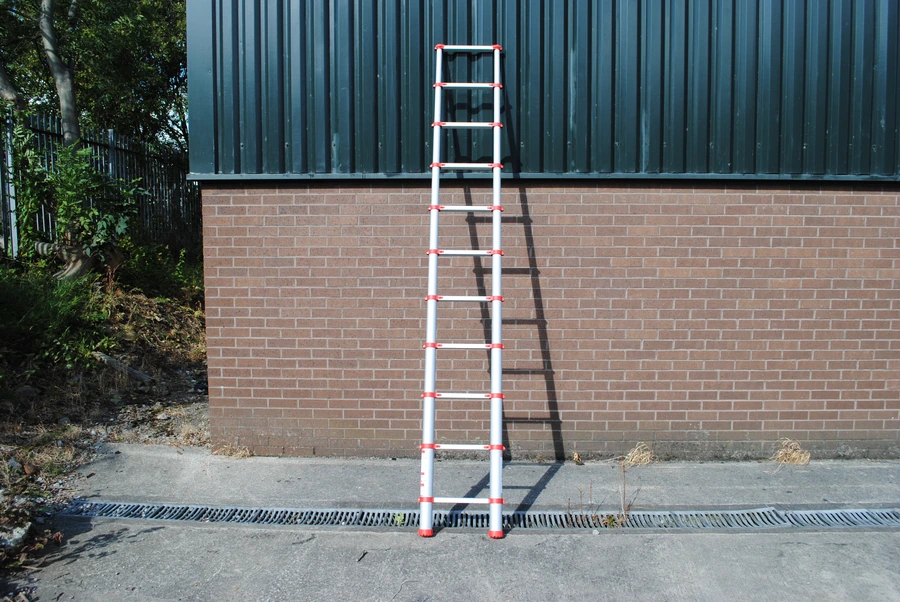
2. Extension ladder
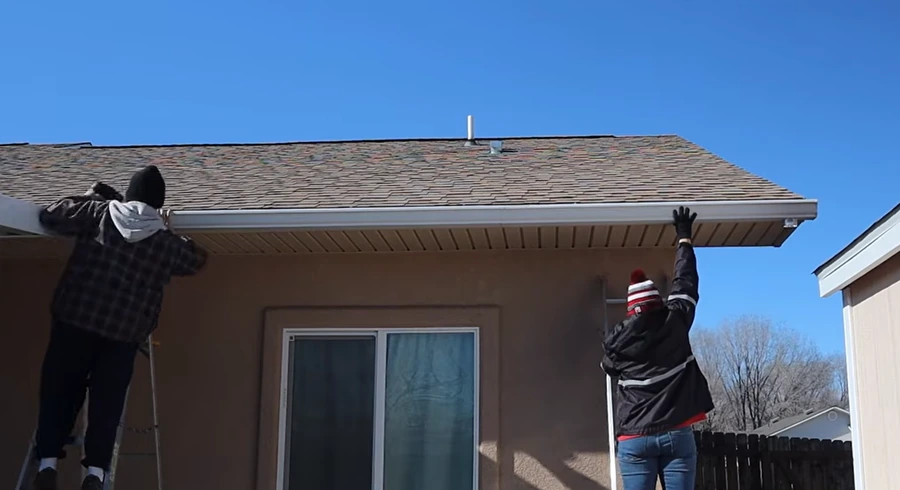
A sturdy extension ladder with a standoff gets the crew to the roofline without denting the gutter or the siding. On two-story Green Bay homes we work from ladders rated for the height, tied off and footed for safety.
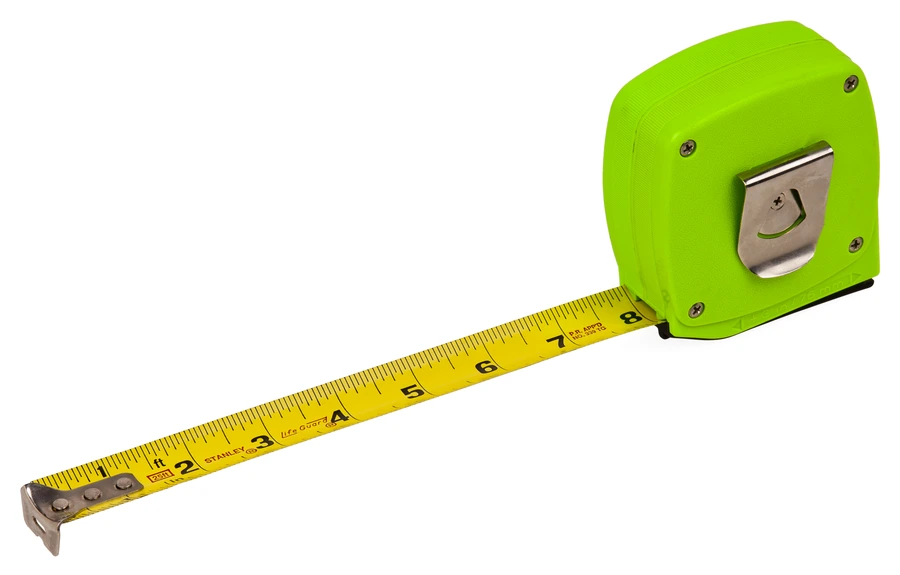
3. Tape Measure
Every run starts with the tape measure. We measure each roof edge to the inch so the seamless coil is cut to the exact length — too short wastes material, too long kinks on the way up.
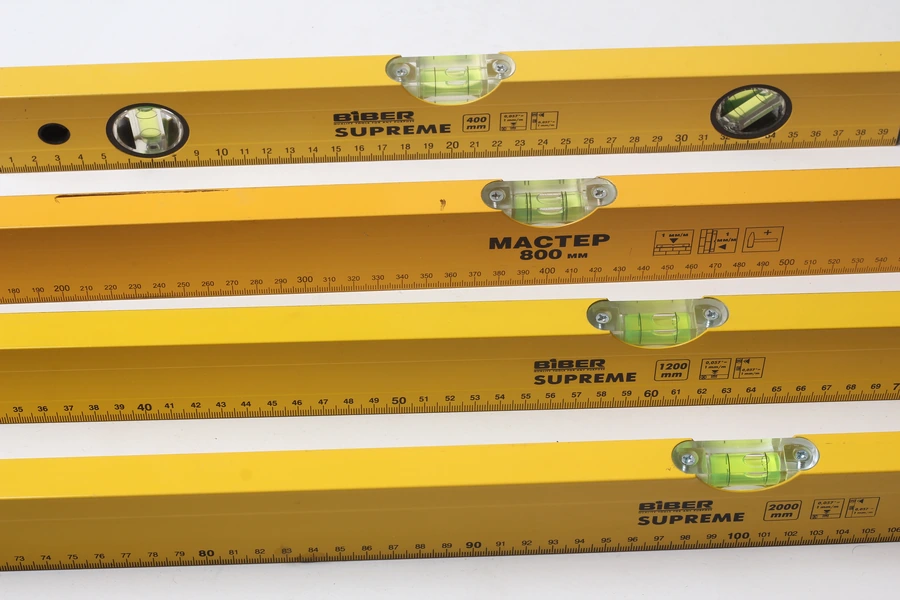
4. Spirit levels
A 2-foot and a 4-foot spirit level set the pitch: about a quarter inch of fall for every 10 feet toward the downspout. Too flat and water ponds; too steep and it overshoots the outlet.
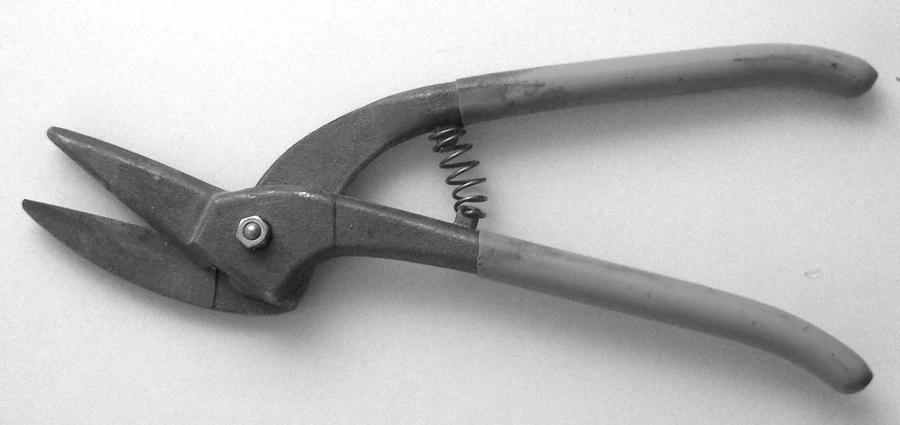
5. Tin snips
Straight-cut and offset tin snips trim gutter sections to length and cut the downspout outlet openings. Sharp snips mean clean edges that seal tight.
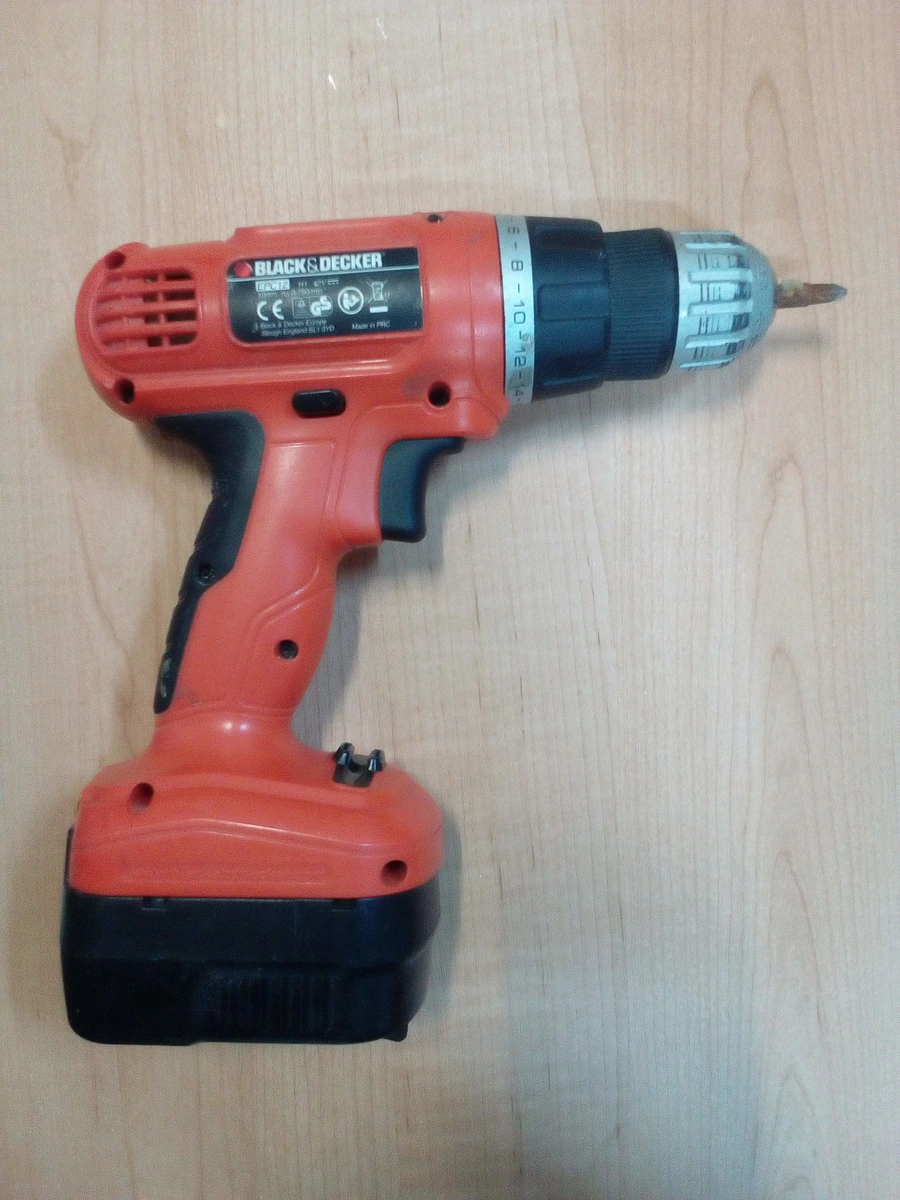
6. Cordless drill
The cordless drill drives the screws that hold every hanger and bracket. We use it with a clutch setting so fasteners bite solid without stripping the fascia.
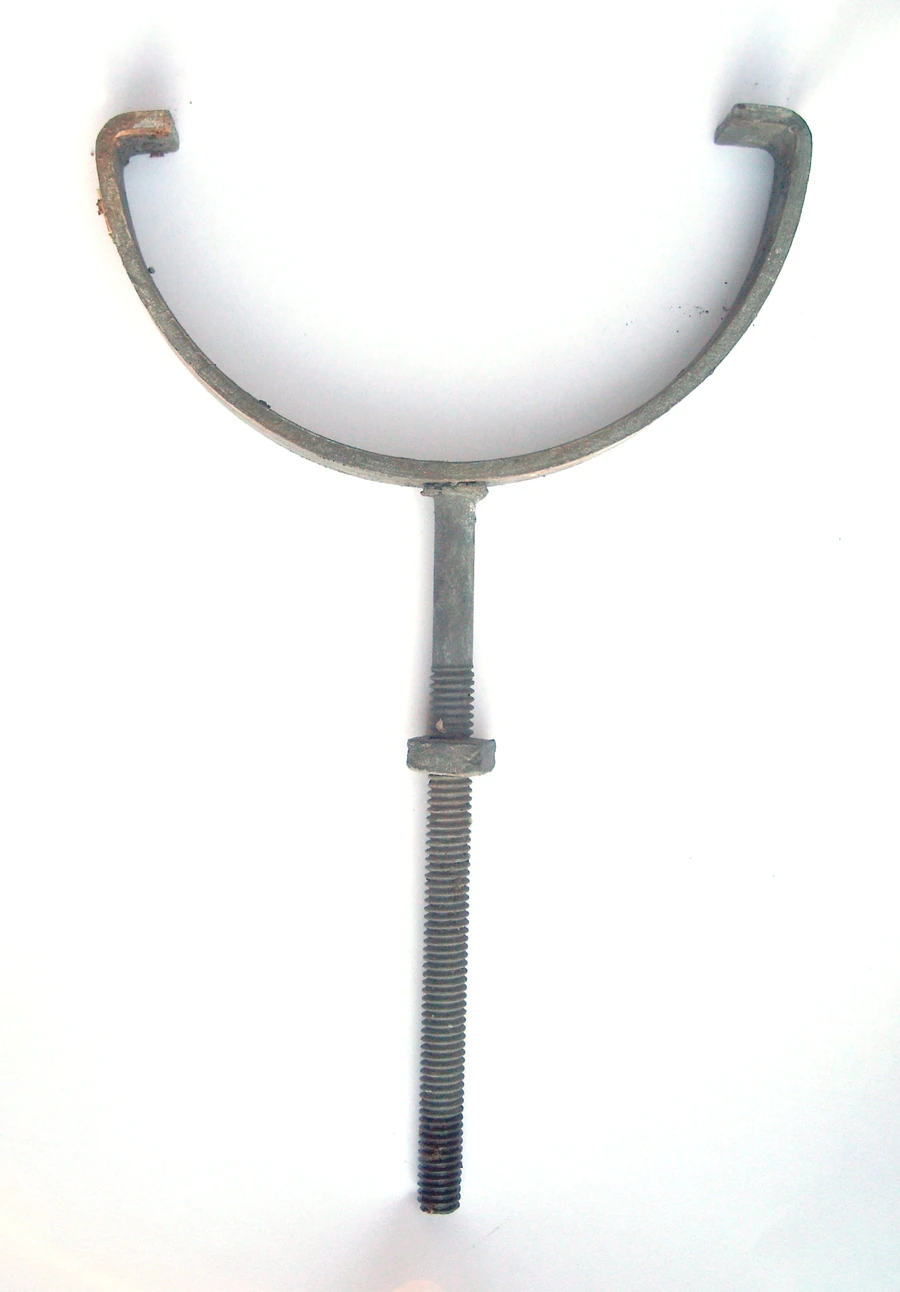
7. Gutter bracket
Hidden hangers (brackets) screw through the back of the gutter into the fascia every 24 inches. They carry the full weight of a water-loaded gutter in a Green Bay downpour.
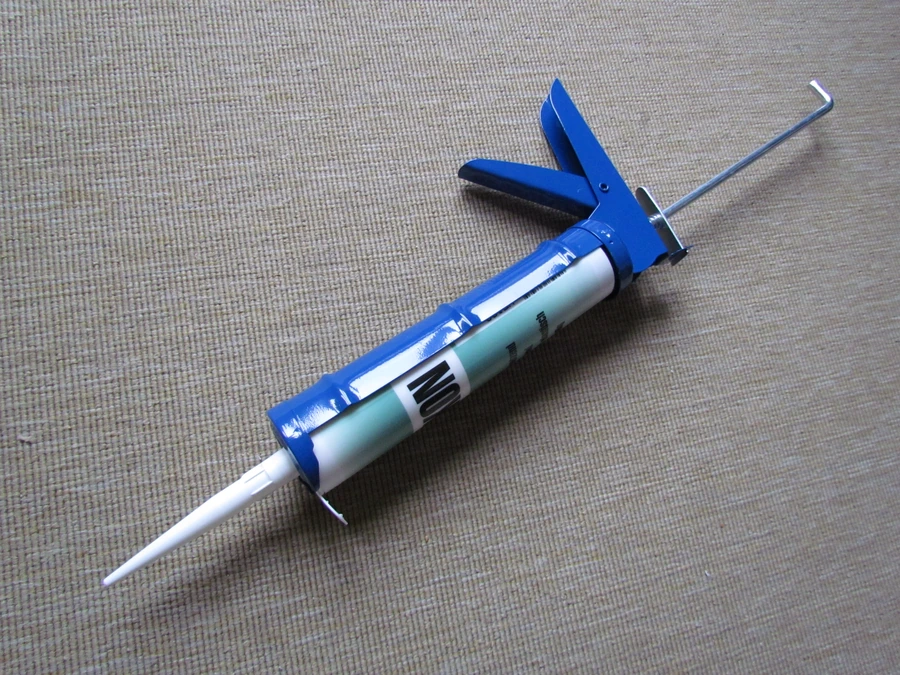
8. Sealant gun
A sealant gun lays a smooth bead of flexible, paintable sealant inside corners, end caps and joints. It stays rubbery through freeze–thaw so the seal does not crack in January.
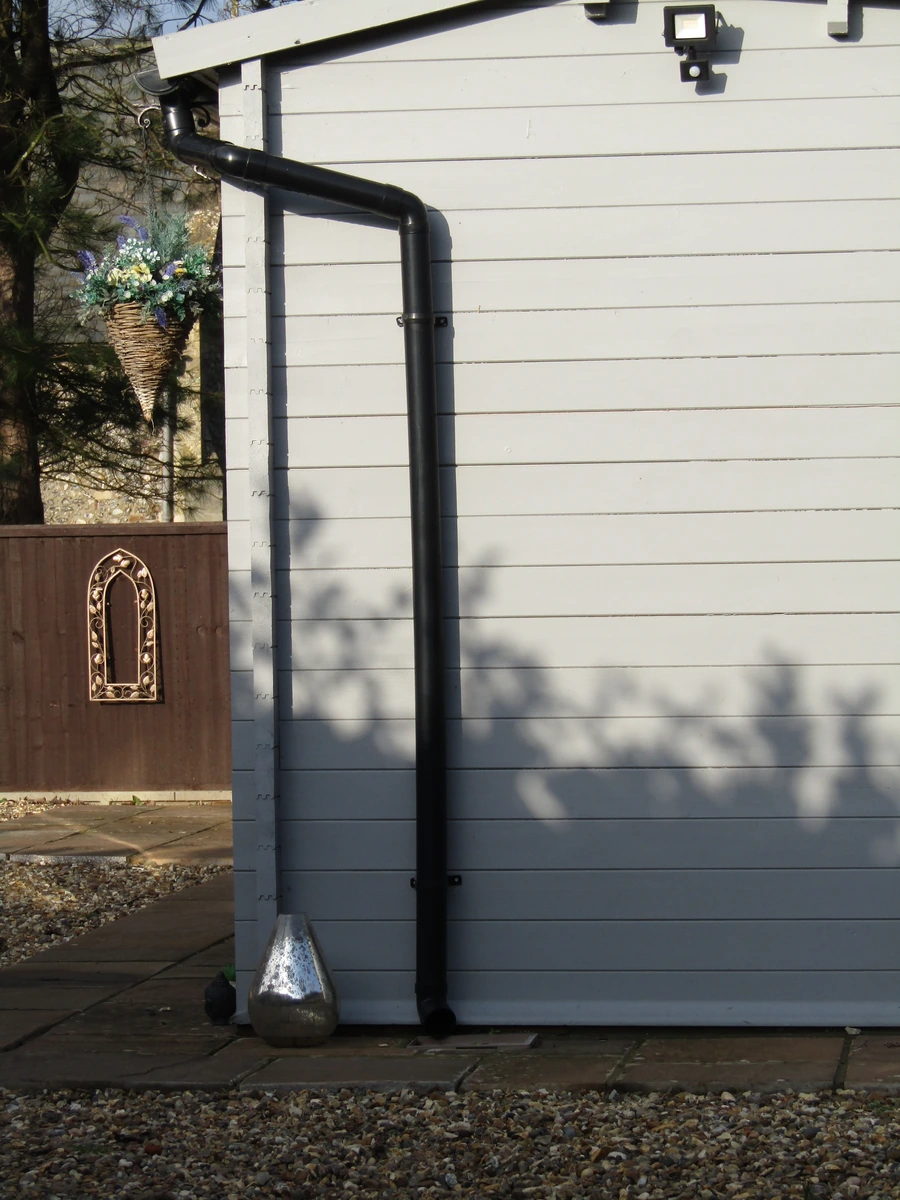
9. Downspout and elbows
Downspouts are the exit route. We use 2×3-inch rectangular downspouts for most homes, with elbows top and bottom to stand the pipe off the siding and throw water away from the foundation.
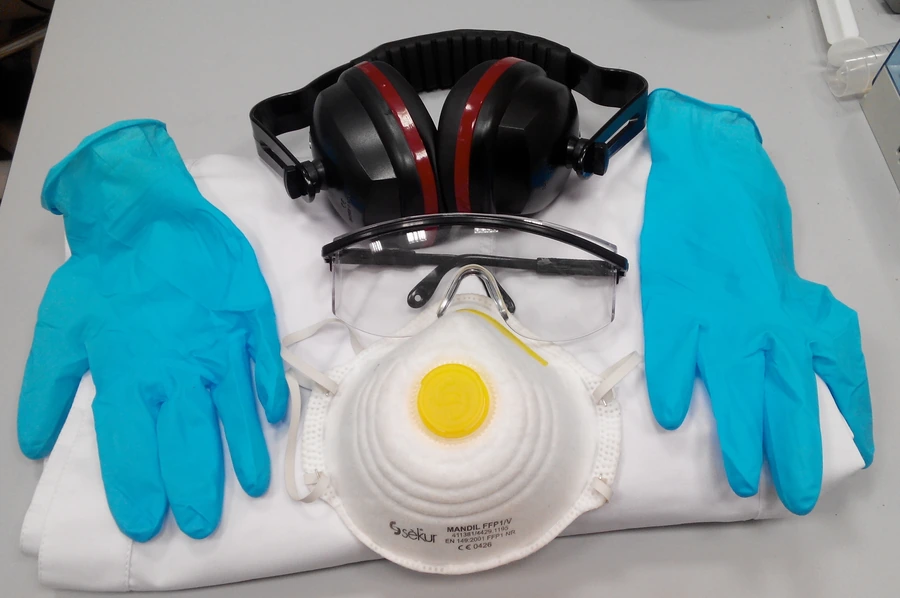
10. Safety gear
Safety glasses, gloves, ear protection and a dust mask. Cutting aluminum throws sharp slivers, and the roll-former is loud — the crew gears up before the first cut.
How Gutter Is Installed
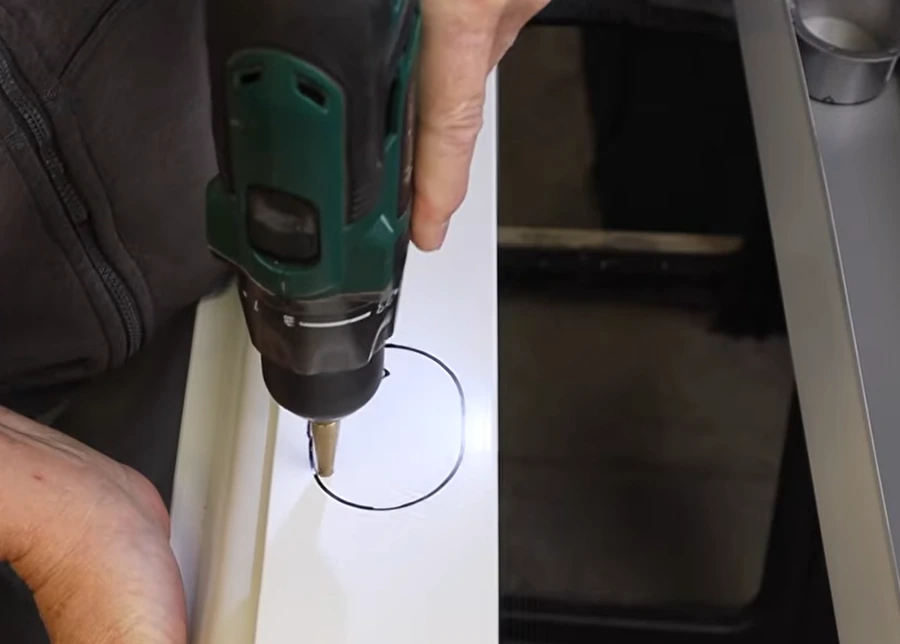
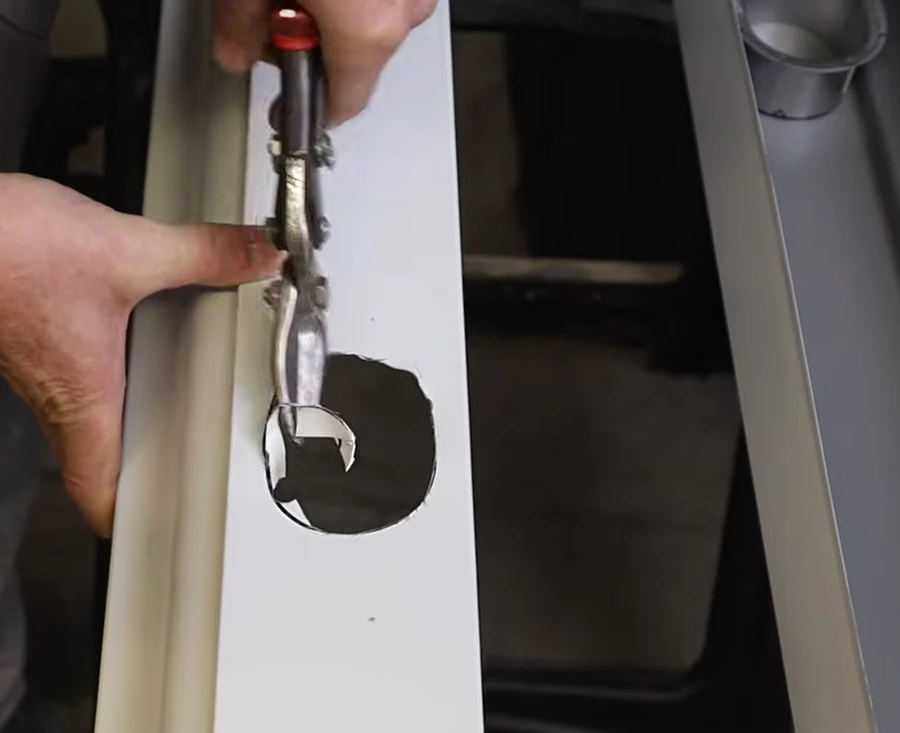
Here is how a standard install goes, start to finish:
- Measure — every roof edge is measured to the inch.
- Form — the roll-former extrudes seamless aluminum to the exact length.
- Cut outlets — downspout outlet holes are drilled and trimmed with tin snips.
- Hang — brackets go up every 24 inches, pitched toward the downspouts.
- Seal — corners, end caps and joints get flexible sealant.
- Downspouts — pipes and elbows are fitted to carry water clear of the foundation.
Timing: a straightforward single-story home is usually done in one day; larger or two-story homes can run into a second day.
You can read our full process for gutter installation here.
How Much Does Gutter Installation Cost in Green Bay?
Every home is different, so we quote each job after a free on-site inspection — no flat prices, no phone guesses. What we can tell you is how materials compare, so you know what you are choosing between:
| Material / type | Typical life |
|---|---|
 Vinyl | 10–15 years |
| Aluminum (sectional) | 15–20 years |
| Aluminum (seamless) | 20–30 years |
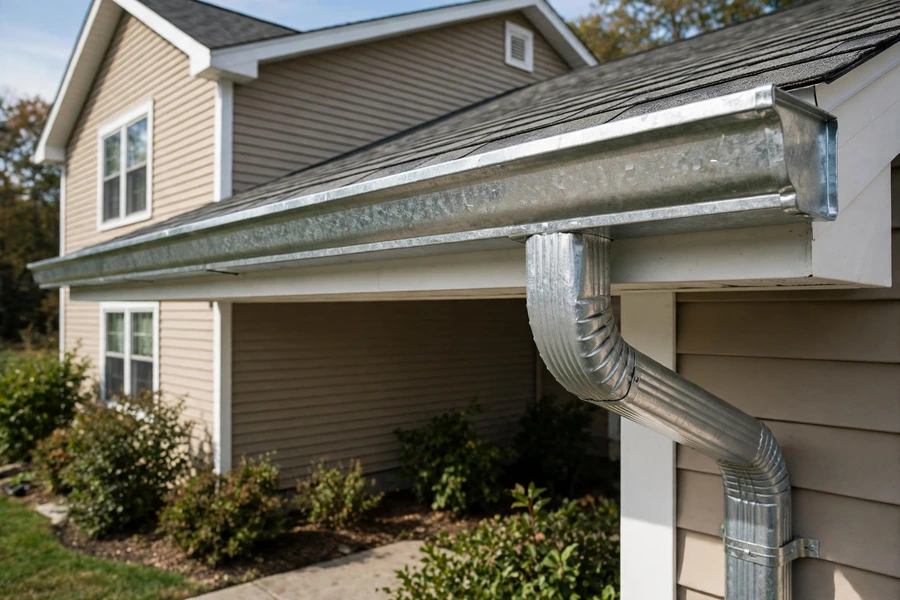 Steel (galvanized) | 20–30 years |
| Copper | 50+ years |
Things that change the quote:
- Roofline length and number of corners — more feet and more miters mean more material and labor.
- Stories — two-story homes need more ladder time and longer downspouts.
- Fascia condition — rotted fascia gets repaired or replaced before new gutters go up.
- Gutter size — 6-inch costs more than 5-inch but handles heavy roof runoff.
- Extras — gutter guards, rain barrels and underground drains add to the quote.
Book a free inspection and we will measure your roofline, check the fascia, and give you one upfront quote for the whole job.
Does Your Gutter Need to Be Installed or Replaced?
If your gutters are still solid, you may only need a repair. If the system is failing, a new install saves money over patching. Call for a brand-new install when:
- Rust holes or cracks you can see daylight through.
- Gutters pulling away because the fascia behind them is rotted.
- Undersized 5-inch gutters that overflow every storm — step up to 6-inch.
Gutter Installation FAQs
How long does gutter installation take?
Most single-story Green Bay homes are done in one day. Two-story or larger homes can run into a second day, mainly because of extra ladder work and longer downspout runs.
What is the best gutter for a house in Green Bay?
Seamless aluminum. It is light, rust-proof, handles freeze–thaw, and the lack of joints means fewer leak points through a Wisconsin winter.
How long do new gutters last?
Seamless aluminum typically lasts 20–30 years, steel about the same, and copper 50 years or more. Vinyl is shorter-lived at 10–15 years.
Do I need bigger gutters for a steep roof?
Often, yes. Steep roofs shed water fast, which can overshoot a 5-inch gutter. We size up to 6-inch K-style or add an extra downspout where the roof dumps hardest.
Can gutters be installed in winter?
Yes, on dry days above freezing. Sealant needs a minimum temperature to cure, so we schedule winter installs for milder stretches and never install on icy roofs.
Do you install gutter guards too?
Yes. Ask about adding guards during the install — it is cheaper to do both at once than to come back later, and guards keep the new system flowing.
Will installation damage my roof or siding?
No. Hangers fasten to the fascia board, not the roof deck, and ladders go up with standoffs so they never rest on the gutter or siding.
How far should downspouts run from the house?
At least 4–6 feet from the foundation. We set elbows and extensions to carry water well clear of the basement walls.
Do new gutters come with a warranty?
Material warranties come from the manufacturer and vary by metal. We stand behind our installation workmanship — ask us about the details during your free inspection.
How do I get a quote for gutter installation in Green Bay?
Book a free inspection. We measure your roofline, check the fascia, and give you one upfront quote for the whole job — no pressure, no obligation.
Keep your gutters working after the install
Gutter Cleaning — If your gutters are clogged or overflowing, explore our gutter cleaning in Green Bay before you decide on new gutters.
Gutter Repair — For leaks, sagging runs and bad corners that do not need full replacement, see our gutter repair service in Green Bay.
Our Process — Want the full step-by-step? See our full process from first call to final walkthrough.
Green Bay — Back to our Green Bay gutter services.
Call Now — Free Estimate